by Carol Adams
This post covers discussions in Sydney on Nature Positive, in Berlin on sustainability reporting on impacts and in London on the work of the ISSB and the collaboration between GRI/GSSB and the IFRS Foundation/ISSB.
Nature Positive in Australia and tracking corporate biodiversity impacts
The Australian Minister for the Environment and Water, Tanya Plibersek spoke at an event I attended in Sydney on 14th June reiterating the Australian government’s commitment to Nature Positive and the aim to:
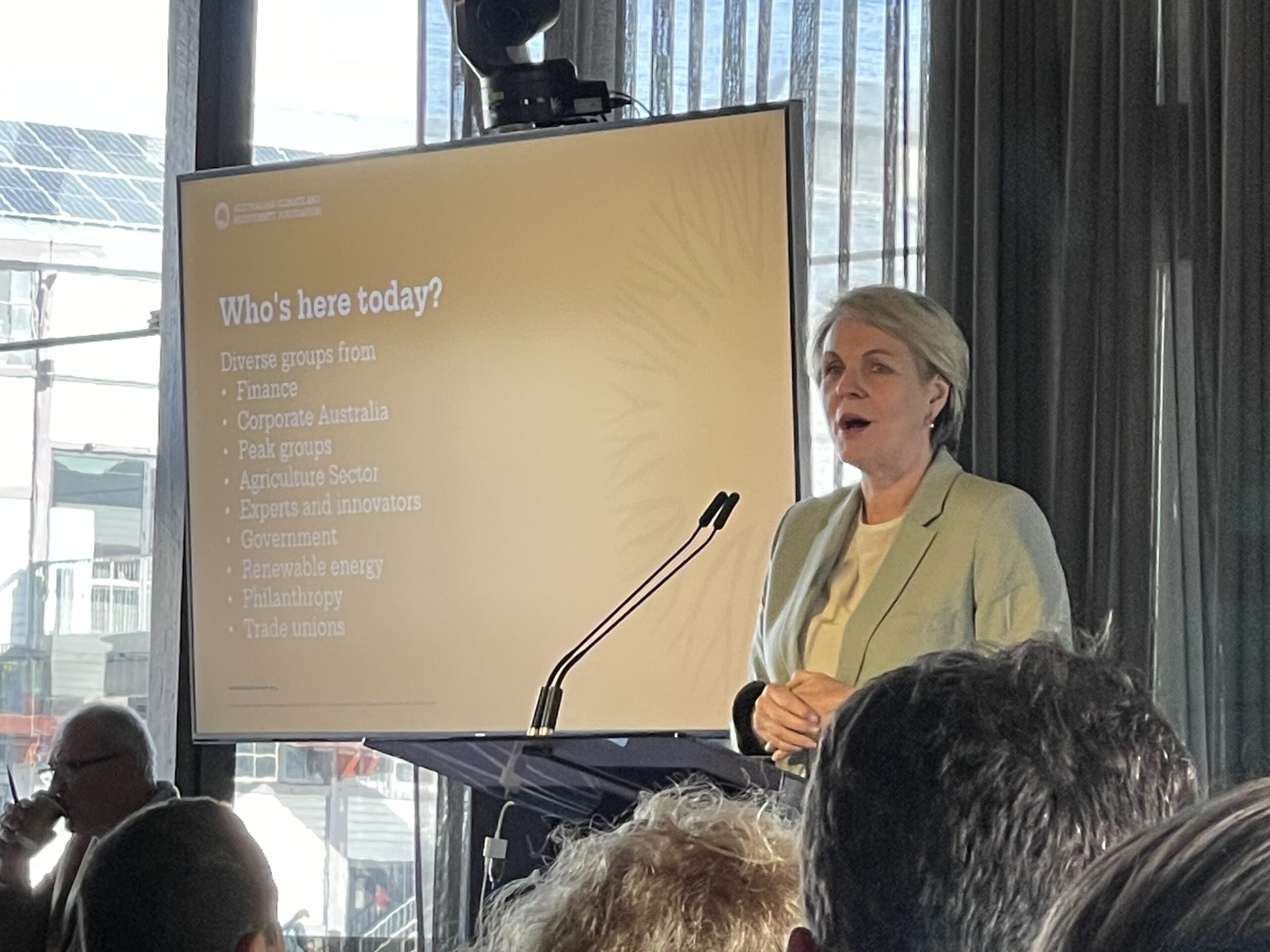
- Address the question: “How do we change economics so that we are valuing restoring nature rather than valuing its destruction? She noted that the most recent State of the Environment report showed a worsening situation set to continue and that environment laws were not fit for purpose.
- Facilitate change by organisations noting that companies working internationally need to be able to report on their impact on nature. (Of course, I mentioned GRI 101 on Biodiversity)
- Make it easier for companies to report their impacts.
- Develop a way for businesses that have a negative impact to “compensate” for it.
- Have Australia to play a leadership role.
Notably, in the discussion, sustainability leaders from large global companies stood up and said they needed to have a social licence to operate and hence their focus on environmental assets and impacts. One talked about dependencies that are affected by impacts. Others talked about farmers and how they would struggle to collect data – the issue for farmers was referred to as the ‘scope 3 of biodiversity issues’.
ESMT Berlin bringing academics, policy makers and corporate leaders together
On the 19th June ESMT Berlin delivered a wonderful programme on ‘Reporting with Impact: linking ESG Reporting and Managerial Decision Making’ and I had the pleasure of joining a panel on ‘implementing mandatory sustainability reporting’. Here I summarise what I said and some of the other highlights (bearing in mind the Chatham House Rules).

I talked about the long history of voluntary social and environmental reporting (as it was known then) which has been tracked by academic accountants going back to the 1800s. My own work has tracked reporting on the nature of women’s employment since World War II and reporting on the employment of ethnic minorities in the UK through periods of immigration, intense race politics and racism. So sustainability reporting as we know it now is not new and recognition of the importance of reporting on impacts and how they are managed is increasing – the point being, it won’t go away.

Globalisation has increased the significance of corporate impacts. Companies that have ignored them or managed them poorly continue to suffer. Barclays Bank and Shell were boycotted due to their support for apartheid. The 1970s saw the Nestlé baby milk formula scandal, the 1980s the Union Carbide Bhopal disaster and widespread boycotts of Nike due to labour rights and child labour issues in their supply chain and Shell was again in the news in the 1990s over Brent Spar and complicity with the military government in Nigeria over its treatment of the Ogoni people. And in that decade I examined scandals, mishaps and blatant greenwashing by some chemical and pharmaceutical companies. I found a ‘portrayal gap’ between corporate disclosures on their impacts and the account in the media and reports by NGOs and industry bodies. Ethical Consumer has been tracking these issues and boycotts since 1989, current ones relating to human rights, animal rights, environmental issues and tax avoidance. The current list again underscores the importance of reporting on impacts and how they are managed.
And so, with globalisation and the increasing size of companies and hence their impacts that followed, greenwashing began. Greenwashing is first and foremost about a lack of transparency on impacts. Over the last few decades greenwashing has taken the form of omission, understatement or misleading readers about the science.
One significant scandal in the 1990s led to the formation of GRI. The Exxon Valdez oil tanker ran aground on a reef off the Prince William Sound in Alaska in 1989 spilling millions of gallons of oil causing devastation to fish, bird and animal life and causing hundreds of millions of dollars of economic harm including to fisheries, tourism and recreational sport.
The GRI Standards aim to provide transparency on how an organisation contributes to sustainable development and how its impacts on sustainable development are managed. The standards go through a rigorous due process and, appropriately for the subject matter, are developed through a multi-stakeholder approach involving investors, labour, civil society organisations, reporting organisations, consultants and other mediating institutions. The standards are shaped by international authoritative instruments that underpin the expectations of responsible business conduct. These ingredients to the GRI Standard setting process, particularly when coupled with external assurance of reports, give reporters:
- the social licence to operate that they need to survive
- the information they need to manage their impacts and hence risk
- the ability to identify opportunities for improvement
- trust – with regulators, investors, perspective employees and other stakeholders
- the ability to make more informed decisions using an array of data to deal with complexity
- the information needed to reassess the business model and strategy to align with sustainable development trends
Investors and other stakeholders want to know how well impacts are managed because impacts affect dependencies and over time bring risks and opportunities with financial consequences. Information on an organisation’s impacts also allows them to assess the consequences of the cumulative impacts of many organisations over time.
GRI Standards have formed the basis of mandatory requirements, most notably the ESRS in Europe, but also those of the Securities and Exchange Board of India and other countries are recognising the need to track organisational impacts, for example on biodiversity, as in the case of Australia.
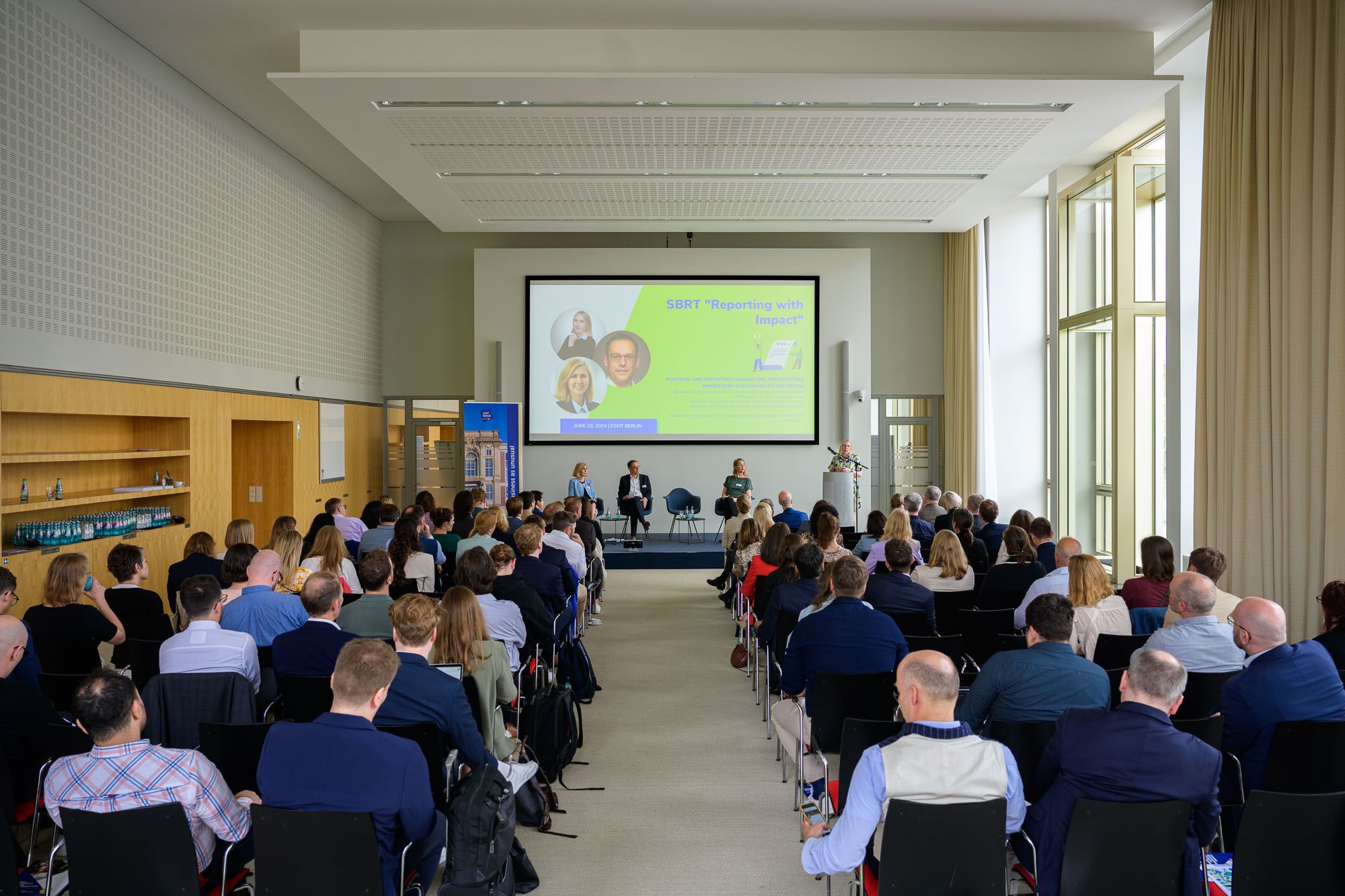
An audience member asked the panel of standard setters and regulators how their approaches take into account planetary boundaries. Under GRI Standards it is a consideration in selecting the organisation’s most significant impacts on which to report (GRI 3).
Other highlights of the day were a presentation by the Chief Sustainability Officer of Deutsche Bank on their approach to Net Zero, a discussion between senior corporate leaders on sustainability reporting and one with sustainability assurance partners facilitated by GRI’s Claire Dugan on auditing and supporting sustainability.
The IFRS Foundation conference and the work of the ISSB

An impressive amount of interesting work is going on at the IFRS Foundation and the ISSB, good to catch up with colleagues and friends there, and also to witness progress in joint work with GRI and the GSSB to facilitate a sensible and seamless standards eco-system. As one speaker put it, GRI and IFRS S Standards do different things – GRI Standards cover impacts for all stakeholders and IFRS S Standards cover risks and opportunities for investors – so ‘interoperability’ is not about overlap and reconciling disclosures as it is in the work both global organisations are doing with ESRS.


Speak Your Mind