by Carol A Adams
Public sector sustainability reporting needs a significant step up. In the context of pressing and inter-connected sustainable development issues and national government commitments to address them, there is a need for transparency that will facilitate further action. Better access to information on management approach, strategy, governance oversight and consistent data on the impacts of public sector organisations, their policies and programmes is the foundation for this. Such information shows where progress is being made, informs public-private partnerships and reveals the contributions of different actors to positive and negative social, economic and environmental impacts. Such transparency leads to greater stakeholder trust.
This report, published today by the Chartered Institute of Public Finance and Accountancy (CIPFA) and endorsed by the Institute of Chartered Accountants of Scotland (ICAS), is aimed at preparers of sustainability disclosures and reports and policy makers. It benefited from feedback from a number of experts (see page 2). The work was completed in 2022 and was reviewed by committees at both CIPFA and ICAS.
A multitude of guidelines and requirements have been developed for specific organisations, sub-sectors within the public sector and for different local government areas or States, even within the same country. This is inefficient. Many of these require disclosure of indicators and information that is a subset of those required by GRI Standards, but with no consideration given to national, let alone global, consistency. This report makes a case for that consistency to assist national governments meet their commitments to the United Nations Sustainable Development Goals, the Paris Agreement, the United Nations Guiding Principles (on Business and Human Rights) and their peoples.
This report discusses these issues in the context of research, highlighting the inadequacy of current public sector sustainability reporting. Information collected through the sustainability reporting process is essential to decision-making to minimise negative impacts, promote positive impacts and create value for economies, society and the environment. It is critical to efficient resource allocation.

This report sets out key steps to assist organisations in planning and preparing their reports and developing a strategy for further improvements in their reporting. The use of existing, global Standards and frameworks is encouraged. This report highlights how reporting can be further improved through additional disclosures that encourage sustainable development thinking and action.
The report encourages policy influencers and regulators to consider the use of GRI Standards for impact reporting rather than developing new metrics for the same topics. It encourages public sector organisations to work towards reporting in accordance with them and identifies steps to follow to build on this base using other global Standards and frameworks in a complementary way. The report notes the importance of disclosures on governance, management approach, strategy, performance and targets in facilitating change and maximising the ability of public sector organisations to create value for themselves, economies, society and the environment.
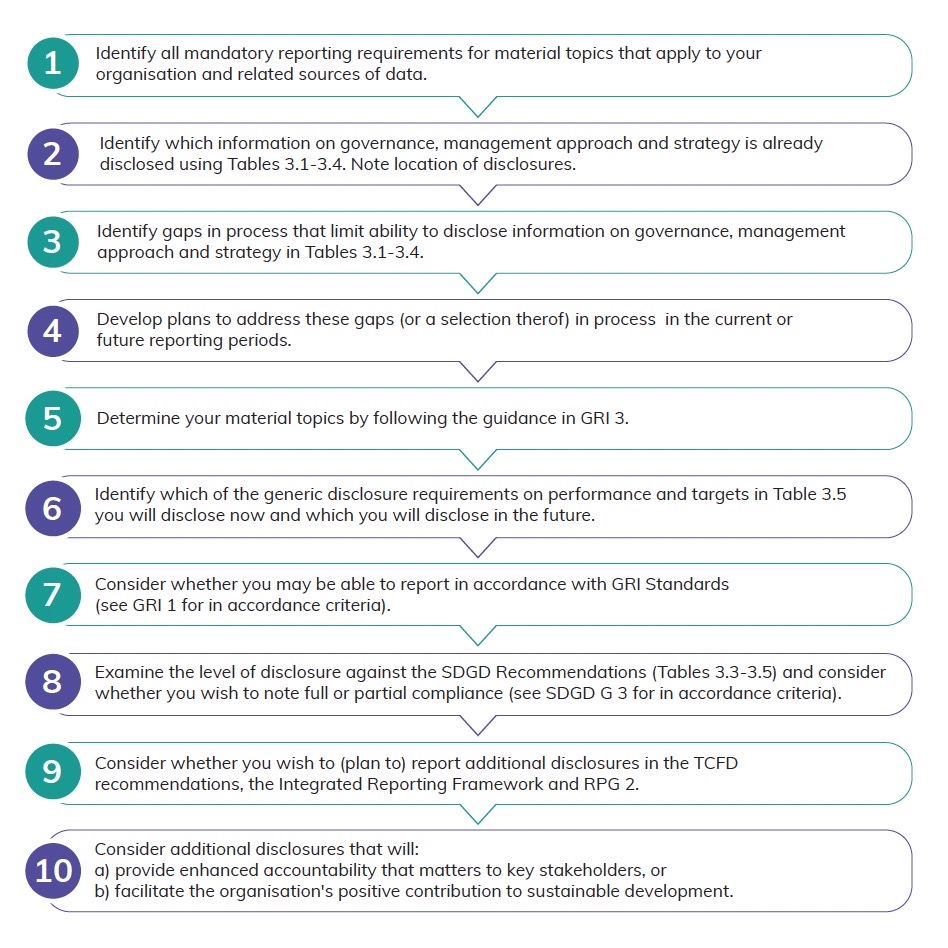
The report provides context for accounting and finance professionals to determine where to use their skills to assist their organisations to provide better information and make more informed decisions.


I commend the report and post. However, given the challenges we faced, this is already late.
We should be focused on mandatory reporting and outlining specific sanctions for non-performance.
Focus on significantly reducing inequality and implementing policy recommendations detailed in ‘Earth for All’ should be our current action.
Hi Glen, Thanks for reading. I agree – what’s needed is mandatory reporting on the impacts of organisations on society, the environment and economies. Too much effort is being expended by public sector agencies on developing metrics and reporting on impacts for matters on which they already exist – and have been through a rigorous due process.